Concrete Patios
Create an outdoor living space that brings your family together with a custom concrete patio built for comfort and durability.
Why a Concrete Patio Makes Sense
Your backyard should be a place where you can relax, entertain, and spend time with the people you care about. A concrete patio gives you a solid foundation for outdoor furniture, grills, fire pits, and whatever else you need to enjoy your space. Unlike wood decks that need constant staining and maintenance, concrete patios are built to last with minimal upkeep.
Concrete works in any climate. In Holyoke, where we experience hot summers and cold winters, concrete stands up to temperature swings without warping, rotting, or shifting. It does not attract insects like wood does, and it will not fade or splinter over time. A well-designed patio can increase your property value and give you years of outdoor enjoyment.
Holyoke Concrete specializes in custom patio installations that match your vision and budget. Whether you want a simple slab for grilling or an elaborate outdoor living area with multiple levels and features, we can build it. We take time to understand how you plan to use your patio so we can design a space that works for your lifestyle.
Planning Your Patio Layout
A successful patio starts with good planning. You need to think about size, shape, location, and how the patio will connect to your home and yard.
Size and Shape
How big should your patio be? That depends on what you want to do with it. A small patio for a bistro table and two chairs might only need 100 square feet. A larger space for dining and seating could require 300 square feet or more. We help you figure out the right size based on your furniture, activities, and yard dimensions. Shape matters too. Rectangular patios are efficient and easy to build. Curved or custom shapes add visual interest but cost more.
Location and Sun Exposure
Where you place your patio affects how much you will use it. Think about sun exposure throughout the day. Do you want morning sun for coffee or afternoon shade for dinner? Consider views, privacy, and access to your house. The patio should feel like a natural extension of your indoor space. We also look at drainage and grade to make sure water flows away from your foundation.
Connecting to Your Home
Your patio should flow naturally from your house. We can pour the concrete right up to your door or add a small step down. If you have a sliding glass door, a level patio makes the transition seamless. We also think about how people will move between the patio and the yard. Pathways, steps, and landscaping all play a role in creating a cohesive outdoor space.
Patio Features and Finish Options
Concrete patios do not have to be boring slabs. You have plenty of options to customize the look and functionality of your outdoor space.
- Colored Concrete: Add pigment to the concrete mix or apply a stain after it cures. You can match your home exterior or create contrast with the landscape. Earth tones like tan, brown, and terracotta are popular choices.
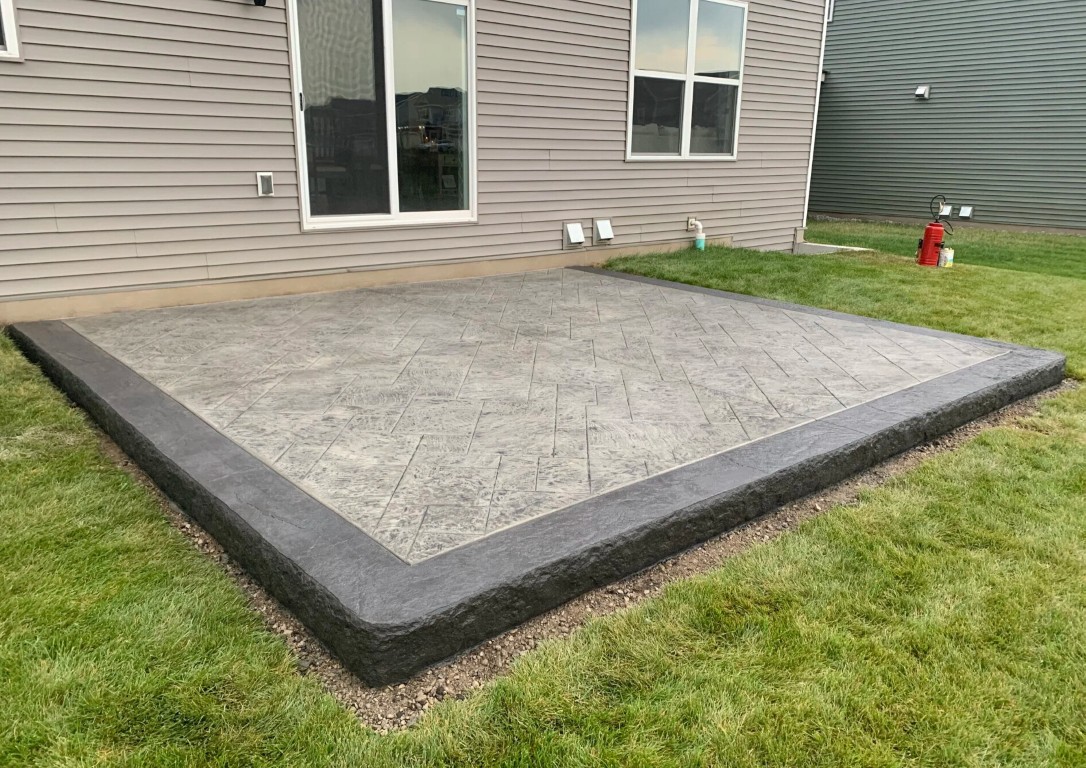
- Stamped Patterns: Stamped concrete can look like stone, tile, or brick. It adds texture and visual appeal without the high cost of those materials.
- Exposed Aggregate: This finish reveals the stones in the concrete, creating a natural, textured surface. It is slip-resistant and hides dirt well, making it practical for high-traffic areas.
- Borders and Bands: Add a contrasting border around the edges or create bands that divide the patio into sections. This is a simple way to add detail without a lot of extra cost.
- Integrated Fire Pits or Seating: We can build concrete benches, planters, or fire pit bases right into the patio. These built-in features save space and create a custom look.
Each feature adds to the overall cost, but even small touches can make a big difference in how your patio looks and feels. We will walk you through options that fit your budget and style preferences.
Concrete Patio Questions and Answers
How thick should a concrete patio be?
Do I need to seal my concrete patio?
Can you pour a patio over grass?
Ready to Build Your Dream Patio?
Let us help you design and build a concrete patio that fits your lifestyle and budget.